The History of the Bowie Knife: From the Alamo to the Timber Rattler
Discover the legendary story of America's most iconic blade—from Jim Bowie's famous Sandbar Fight to modern replicas that keep the frontier spirit alive
Jim Bowie and the Sandbar Fight of 1827
The Bowie knife legend was born on September 19, 1827, on a sandbar in the Mississippi River near Natchez, Louisiana. James "Jim" Bowie, already a well-known frontiersman, land speculator, and adventurer, attended what was supposed to be a gentlemanly duel between two other men. But when old rivalries flared, the encounter erupted into a chaotic melee known as the Sandbar Fight.
During the brutal brawl, Jim Bowie was shot twice and stabbed multiple times. Despite his injuries, Bowie managed to draw his large fixed-blade knife—a weapon unlike anything seen before. With devastating effectiveness, he used the knife to defend himself, disemboweling one attacker and mortally wounding another. The knife's performance in close combat was so impressive that news of the fight spread across the American frontier like wildfire.
Within months, newspapers from New Orleans to New York were reporting on "Bowie's knife," and demand for similar designs exploded. Blacksmiths, bladesmiths, and cutlers across the South and West began producing their own versions, each adding unique touches while maintaining the knife's distinctive characteristics: a long, heavy blade with a clip point, substantial crossguard, and robust construction.
Jim Bowie himself became a folk hero, and his knife became synonymous with frontier courage and self-reliance. When Bowie died defending the Alamo in 1836 during the Texas Revolution, his legend—and that of his famous knife—was forever cemented in American history. The Bowie knife had evolved from a personal weapon into a cultural icon representing the untamed spirit of the American West.
Fast Facts: The Sandbar Fight
- •Date: September 19, 1827
- •Location: Mississippi River sandbar near Vidalia, Louisiana
- •Participants: 10+ armed men from rival factions
- •Bowie's Injuries: Shot twice, stabbed seven times, survived
- •Outcome: Two men killed, several wounded—knife became legendary
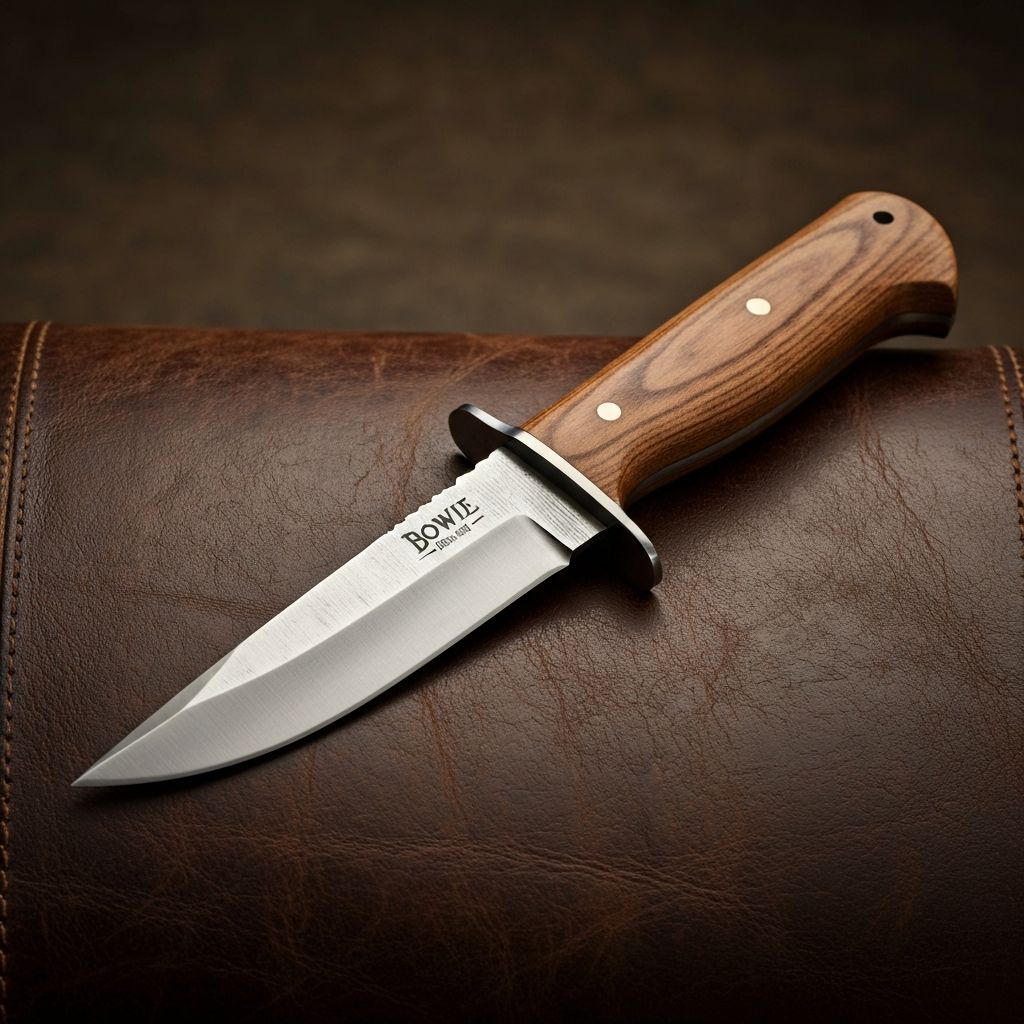
Anatomy of an American Icon: The Bowie Knife Design
What makes a Bowie knife a Bowie? Understanding the distinctive features that define this legendary blade style
The Clip Point Blade
The signature feature of a Bowie knife is its clip point blade—the spine curves downward near the tip, creating a sharp, piercing point. This design, inspired by Spanish hunting knives, was revolutionary for its time. The clip point allowed for deep, controlled penetration while maintaining a strong belly for slicing. Bowie knife blades typically range from 9 to 15 inches, with some modern replicas reaching 17 inches or more. The size was intentional: these were weapons of war and survival, designed to handle everything from combat to chopping wood.
The Crossguard Protection
A defining element of the Bowie knife is its substantial brass or steel crossguard (also called a quillon or hand guard). This feature was essential for frontier combat—it prevented an opponent's blade from sliding down and cutting the user's hand during a fight. The crossguard also balanced the knife and added weight to chopping strikes. In the 1800s, these guards were often made from polished brass, which not only looked impressive but resisted rust and corrosion in harsh frontier conditions. Today, the brass guard remains a hallmark of authentic Bowie knife design.
Heavy Weight & Balance
Original Bowie knives were not delicate tools—they were heavy, brutally effective weapons. The thick spine (often 1/4 inch or more) gave the blade structural integrity for chopping tasks and combat. Full-tang construction—where the blade extends through the entire handle—was standard, providing maximum strength and preventing the blade from snapping under stress. Handle materials varied from hardwood to bone to stag horn, but all were designed for a secure grip even when wet with blood or sweat. This weight distribution created a blade that felt more like a short sword than a knife.
Evolution Through the 1800s
After the Sandbar Fight, the Bowie knife design evolved rapidly as different makers added their own interpretations. Sheffield, England became a major production center for Bowie knives in the 1830s-1840s, exporting thousands to the American market. These Sheffield Bowies often featured elaborate engravings, decorative file work on the spine, and ornate handles made from exotic materials.
During the California Gold Rush (1848-1855), Bowie knives were essential equipment for miners and prospectors heading west. The knives served multiple purposes: self-defense against outlaws, hunting game for food, clearing brush, and even prying gold from rocks. The brutal conditions of frontier life meant that Bowie knives had to be tough, reliable, and maintainable with basic tools.
The American Civil War (1861-1865) saw both Union and Confederate soldiers carrying Bowie-style knives as sidearms. While official-issue weapons were prioritized, personal knives—including Bowies—were prized for trench combat, camp duties, and personal protection. After the war, the Bowie knife became a symbol of Confederate Lost Cause mythology and Southern heritage, cementing its place in American cultural identity.
By the late 1800s, as the frontier closed and firearms became more reliable, the Bowie knife transitioned from practical weapon to collectible artifact. However, its design influence persisted—modern hunting knives, combat knives, and survival blades all owe a debt to the original Bowie pattern. What started as one man's personal weapon became the template for American knife design for over a century.
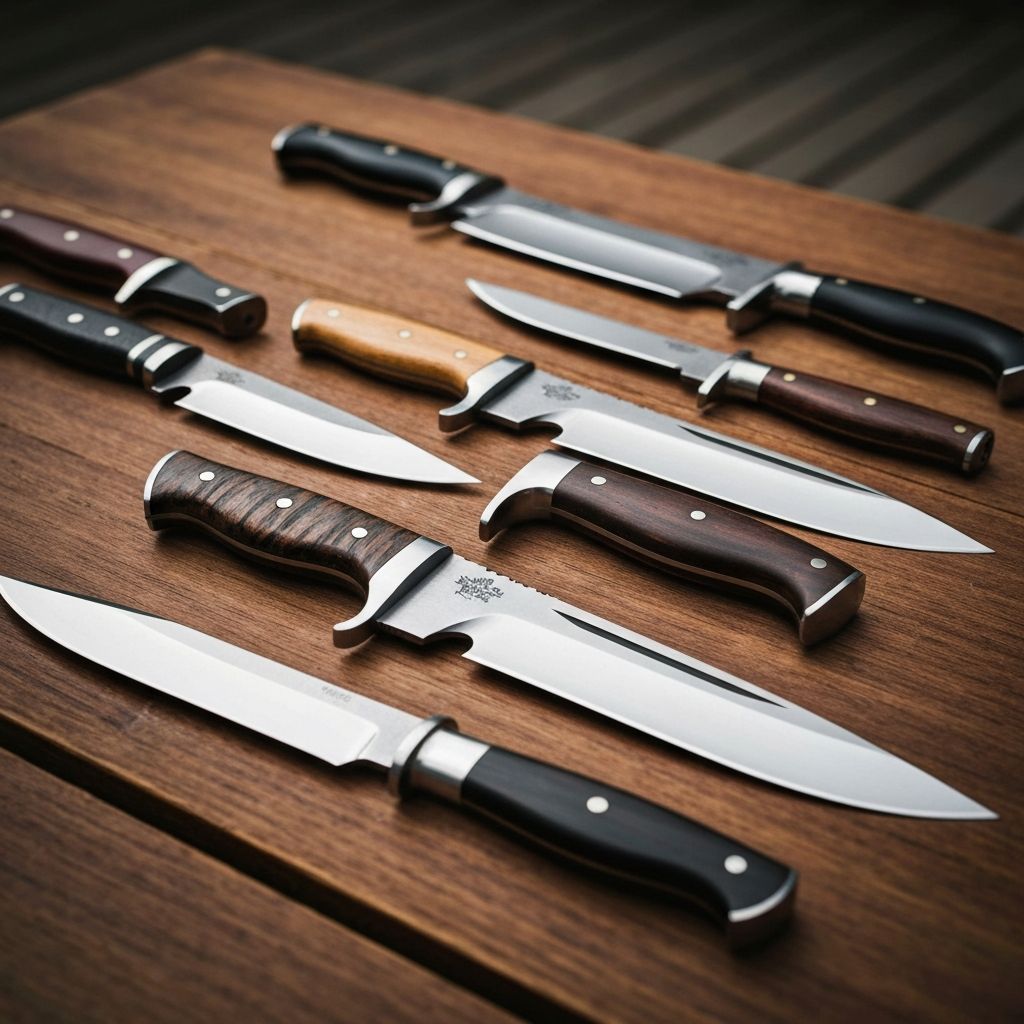
How Timber Rattler Keeps the 1800s Design Alive
At Timber Rattler, we believe the original Bowie knife design doesn't need "improvement"—it needs faithful reproduction with modern manufacturing quality. Our Bowie knives honor the classic patterns that made these blades legendary while using contemporary materials and techniques that ensure reliability and affordability.
Surgical Steel Blades: We use surgical-grade stainless steel for our blades, offering excellent corrosion resistance and easy maintenance. While purists may prefer high-carbon steel (the original material), surgical steel is more forgiving for modern collectors who may not oil their knives daily. The softer steel is also easier to sharpen at home with basic tools—a key advantage for practical users.
Traditional Materials: Our handles feature pakkawood (a wood-resin composite), genuine bone, and natural wood—all materials that would have been familiar to 19th-century knifemakers. The polished brass guards and pommels are authentic reproductions of period designs, complete with traditional styling and proportions.
Period-Correct Proportions: The Timber Rattler Western Outlaw Bowie, our flagship model, measures 17 inches overall with a 12-inch blade—dimensions that mirror the massive fighting knives of the 1830s-1840s. These aren't scaled-down replicas or modernized interpretations; they're full-sized homages to the original frontier weapons.
Timber Rattler vs. Antique Originals: What's the Difference?
Authentic Antique Bowie Knives
- •Original knives from 1820s-1860s by Sheffield makers or American bladesmiths
- •High-carbon steel blades with visible patina and signs of age
- •May feature maker's marks, engravings, or provenance documentation
- •Often fragile or damaged from 150+ years of age and use
- •Typically cost $500-$5,000+ depending on condition and rarity
- •Museum pieces or safe-queen collectibles—too valuable for practical use
Modern Timber Rattler Bowies
- •Contemporary reproductions faithful to 1800s design patterns
- •Surgical stainless steel for easy maintenance and corrosion resistance
- •Timber Rattler branding and modern quality control standards
- •Factory-new condition with full functionality right out of the box
- •Affordable pricing makes frontier history accessible to everyone
- •Perfect for display, outdoor use, collecting, or gifting without financial anxiety
Why Buy a Timber Rattler Bowie Instead of an Antique?
Own a piece of American frontier history without the museum price tag or preservation anxiety
Affordable Access to History
Authentic antique Bowie knives from the 1800s can cost anywhere from $500 for damaged examples to $5,000+ for museum-quality pieces with documented provenance. Jim Bowie's actual knife—if it still existed—would be priceless and locked away in a museum. For most collectors, these prices are simply prohibitive.
Timber Rattler Bowie knives deliver the same visual impact, historical styling, and frontier aesthetic at a fraction of the cost. You get a full-sized, fully functional knife that looks like it came straight from the 1840s—without needing to take out a second mortgage. This accessibility is what we call "Affordable Power."
Worry-Free Ownership
Antique knives are fragile. The steel may be pitted with rust, the handles cracked or loose, the leather sheaths disintegrated. Using an antique Bowie knife for its intended purpose—cutting, chopping, or outdoor work—risks destroying a historical artifact. Many collectors buy antiques only to lock them away in display cases, never daring to handle them.
With a Timber Rattler Bowie, you can actually use your knife. Take it camping. Display it at reenactments. Let your kids hold it (under supervision). Practice your knife skills. There's no anxiety about damaging an irreplaceable artifact—if something happens, you can replace it. This freedom enhances ownership satisfaction.
Modern Reliability
Antique Bowie knives were hand-forged by individual bladesmiths with varying skill levels and materials. Quality was inconsistent—some were masterpieces, others were rough field weapons. After 150+ years, even the best examples suffer from metallurgical fatigue, hidden cracks, and structural weaknesses that make them unsafe for use.
Timber Rattler knives are manufactured with modern quality control, consistent materials, and reliable construction methods. Every blade meets the same standards. You know exactly what you're getting—a functional, durable knife that won't fail you. For practical users, this reliability is invaluable.
Perfect for Collection Building
Building a collection of antique Bowie knives requires significant financial resources, expertise in authentication, and access to reputable dealers or auction houses. Fakes and reproductions are common in the antique market, making it risky for novice collectors. A single mistake can cost thousands of dollars.
Timber Rattler knives let you build an impressive Bowie collection without breaking the bank. You can own multiple designs—the Western Outlaw, the Scarback, the Bone Hunter—each representing different aspects of frontier knife heritage. Display them together for a stunning visual tribute to the Old West, knowing you paid a reasonable price for authentic designs.
The Timber Rattler Philosophy: History for Everyone
We believe that owning a piece of American frontier history shouldn't be reserved for wealthy collectors and museums. The Bowie knife is a symbol of self-reliance, courage, and the pioneering spirit that built this nation—it belongs in the hands of anyone who appreciates that heritage. Timber Rattler knives make that access possible.
Everything You Need to Know About Bowie Knives
Common questions about traditional American knives, Old West blade styles, and what makes a Bowie knife special
What is a Bowie knife used for?
Historically, Bowie knives served multiple purposes on the American frontier. They were weapons of self-defense and combat, hunting tools for field dressing game, camp knives for cutting rope and preparing food, and utility blades for chopping brush or prying. Modern Bowie knives are primarily collectibles, display pieces, and outdoor recreation tools. Many hunters, campers, and survival enthusiasts still carry Bowie-style knives for their versatility and intimidating presence. The large blade excels at heavy-duty cutting tasks that would damage smaller knives.
How do I identify an authentic Bowie knife design?
Authentic Bowie knife designs feature several distinctive characteristics: a clip point blade (curved spine near the tip), typically 9-15 inches in length; a substantial crossguard (usually brass or steel) to protect the hand; full-tang construction for strength; and a thick blade spine (¼ inch or more) capable of heavy work. Traditional handle materials include wood, bone, stag horn, or pakkawood. The overall aesthetic should evoke the 1830s-1860s American frontier—robust, practical, and historically grounded. Modern reproductions like Timber Rattler knives faithfully replicate these elements.
Are Jim Bowie knife replicas legal to own?
In most U.S. states, owning a Bowie knife replica is legal for adults, but carrying them in public may be restricted. Knife laws vary significantly by state and locality—some states classify large fixed-blade knives as "weapons" with specific carry restrictions, while others have no blade length limits. Always check your local and state knife laws before purchasing or carrying a Bowie knife. Timber Rattler knives are sold as collectibles and outdoor tools; buyers are responsible for understanding their local regulations. Generally, keeping Bowie knives at home for display or taking them to private property for camping is legal nationwide.
Why are traditional American knives like Bowies still popular today?
Traditional American knives, especially Bowie knives, remain popular because they represent a tangible connection to frontier history and the mythology of the Old West. They evoke an era of self-reliance, adventure, and rugged individualism that resonates with modern collectors and outdoor enthusiasts. The Bowie knife's iconic design—familiar from Western movies, historical documentaries, and frontier reenactments—has embedded itself in American cultural consciousness. Additionally, Bowie knives are simply impressive to look at and hold. Their size, weight, and craftsmanship command attention. For many owners, a Bowie knife is a conversation piece, a wall display centerpiece, and a reminder of America's pioneering spirit.
What's the difference between a Bowie knife and a hunting knife?
While Bowie knives were historically used for hunting, modern hunting knives are typically smaller (6-10 inch overall length) with thinner, more flexible blades optimized for precision work like skinning and butchering. Bowie knives are larger, heavier, and more robust—designed originally as weapons and general-purpose frontier tools rather than specialized hunting implements. The Bowie's clip point and substantial weight make it better suited for chopping, combat, and heavy-duty camp tasks. Many hunters do use Bowie-style knives, but most prefer lighter, more maneuverable blades for detailed game processing. Timber Rattler offers both full-sized Bowies and smaller hunting knife patterns.
How much should I expect to pay for a quality Bowie knife replica?
The price range for Bowie knife replicas varies dramatically based on materials, craftsmanship, and maker reputation. Budget replicas from discount retailers might start around $20-40 but often feature poor steel quality, loose handles, and disappointing construction. Mid-range reproductions from established brands like Timber Rattler offer excellent value—authentic designs, reliable materials, and proper construction at accessible prices. High-end custom Bowie knives from master bladesmiths can cost $500-2,000+, featuring hand-forged blades, exotic handle materials, and museum-quality fit and finish. For most collectors seeking historical authenticity without custom prices, mid-range brands provide the best balance of quality and affordability.
Own Your Piece of Frontier History
From the Sandbar Fight to your collection—Timber Rattler Bowie knives keep the legend of Jim Bowie and the American frontier alive